📛️
Λατῖνα ὀνόματα
Roman names
🌗️
Λευκὸν χρῶμα
Light theme
Πρωτογόνου
Θυμίαμα σμύρναν
Πρωτόγονον καλέω διφυῆ, μέγαν, αἰθερόπλαγκτον,
Prōtógonon caléō diphyê, mégan, ætheróplancton, ᾠογενῆ, χρυσέῃσιν ἀγαλλόμενον πτερύγεσσι,
ōiogenê, chryséēisin agallómenon pterýgessi, ταυροβόαν, γένεσιν μακάρων θνητῶν τ’ ἀνθρώπων,
taurobóan, génesin macárōn thnētôn t’ anthrṓpōn, σπέρμα πολύμνηστον, πολυόργιον, Ἠρικεπαῖον,
spérma polýmnēston, polyórgion, Ēricepæ̂on, ἄρρητον, κρύφιον, ῥοιζήτορα, παμφαὲς ἔρνος,
árrhēton, crýphion, rhœzḗtora, pamphaès érnos, ὄσσων ὃς σκοτόεσσαν ἀπημαύρωσας ὁμίχλην
óssōn hòs scotóessan apēmaúrōsas homíchlēn πάντῃ δινηθεὶς πτερύγων ῥιπαῖς κατὰ κόσμον
pántēi dinētheìs pterýgōn rhipæ̂s catà cósmon λαμπρὸν ἄγων φάος ἁγνόν, ἀφ’ οὗ Σε Φάνητα κικλήσκω
lampròn ágōn pháos hagnón, aph’ hoû Se Phánēta ciclḗscō ἠδὲ Πρίηπον ἄνακτα καὶ Ἀνταύγην ἑλίκωπον.
ēdè Príēpon ánacta cæ̀ Antaúgēn helícōpon. ἀλλά, μάκαρ, πολύμητι, πολύσπορε, βαῖνε γεγηθὼς
allá, mácar, polýmēti, polýspore, bæ̂ne gegēthṑs ἐς τελετὴν ἁγίην πολυποίκιλον ὀργιοφάνταις.
es teletḕn hagíēn polypœ́cilon orgiophántæs.
To Protogonos
The fumigation from myrrh
O mighty first-begotten1 2 Priapus , dark-ey’d splendour, Thee i sing,
1
According to Orpheus, as related by Syrianus
in Metaph. Aristot. p. 114 , the
first principle; of all things is Unity or the Good itself, and after this the Duad, or Æther and
Chaos, subsists, according to Pythagoras. The first of these, or Æther, approaches to a similitude
of the one itself, and is the representative of bound; the other, Chaos, comprehends in its essence
multitude and infinity. Afterwards (says Syrianus) the first and secret genera of the Gods subsists,
among which the first apparent is the king and father of the universe, whom on this account they
call Phanes.
Now this first and secret genera of the Gods, is no other than all the demiurgical and intellectual
ideas, considered as proceeding to the production of the sensible World, from their occult
subsistence in Æther and Chaos, whose mutual connection Orpheus represents under the symbol of an
egg: upon the exclusion of which egg, by night considered as a principle, the God Phanes came forth,
who is hence denominated Protogonus .
Διὸ καὶ παρ’ Ορφεῖ ἢ Φάνης περικαλλέος Αἰθέρος ἤϊος ὀνομάζεται, καὶ ἃβρὸς Ἕρως ,
says Proclus
in Tim. ii. p. 132 , i.e. “on this account Phanes is called by Orpheus, the son of beautiful Æther, and tender
Love .”
There is likewise another valuable passage on this subject from Proclus
in Tim. p. 291 as
follows. "Orpheus delivers the kings of the Gods, who preside over the universe according to a
perfect number; Phanes, Night ,
Heaven ,
Saturn ,
Jupiter ,
Bacchus . For Phanes is first adorned with a scepter,
is the first king, and the celebrated Ericapæus. But the second king is
Night , who receives the sceptre from the father Phanes. The
third is Heaven , invested with government from
Night . The fourth
Saturn , the oppressor as they say of His father. The
fifth is Jupiter , the ruler of His father. And the sixth
of these is Bacchus .
“But all these kings having a supernal origin from the intelligible and intellectual Gods, are
received into the middle orders, and in the world, both which They adorn. For Phanes is not only
among the intelligible Gods, but also among the intellectual ones; in the demiurgic order, and among
the super-mundane and mundane Gods. And Night and
Heaven in a similar manner: for the peculiarities of
these are received through all the middle orders.
“But with respect to the great Saturn himself, has He
not an order prior to that of Jupiter , and likewise
posterior to the jovial king, distributing the Dionysiacal administration (δημιουργία ) together with the other Titans? and this indeed in a different manner in the heavens and in
things above the moon. And differently in the inerratic stars and in the planets; and in a similar
manner Jupiter and
Bacchus .”
Now on comparing the present hymn, and the hymns to Night ,
Heaven ,
Saturn and
Jupiter together, we shall find Them celebrated as the
sources of all things; and Bacchus is expressly called
Protogonus .
2
Phanes, who, according to the preceding account, is the author of the sensible world, is represented
by Orpheus (for the purpose of shadowing forth the causal, not the temporal production of the
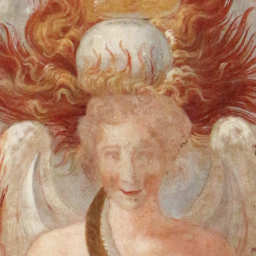
universe) as adorned with the heads of a ram, a bull, a serpent, and a lion.
Now Mithras, according to the Persian theology as related by Porphyry
de antro Nymph , is the father and creator of all things, and he informs us that the ancient priests of
Ceres called
the Moon who is the queen of generation
ταῦρος or a Bull (p. 262 ) and p. 265
ὡς καὶ ὁ ταῦρος δημιουργός ὣν ὁ Μίθρας, καὶ γενεσέως δεσπότης .
i.e. “Mithras as well as the Bull is the demiurgus of the universe, and the lord of
generation.” The reason therefore is obvious why Phanes is called Bull-roarer.
Hence too from the account of Phanes given by Proclus, it follows that what that divinity is in the
intelligible, that Thetis must be in the sensible world. For Thetis according to Proclus
lib. v. in Timæum is
Πρεσβυτάτη Θεῶν , or the most ancient and progenitor of the Gods: and Thetis is the
mother of Venus , and
Protogonus the father of
Night .
Venus therefore in the sensible world is the same as
Night in the intelligible; and the reason is evident why
Night in these Hymns is called
Venus .
I cannot conclude this note without observing how much it is to be lamented that the Platonical
writers are so little known and understood in the present age. for surely if these valuable works
had been consulted, it would have appeared that
Protogonus and Noah resembled each other as much as
the ancient and modern philosophy; or as much as an ancient commentator on Plato, and a modern
Mythology.
 Οἱ Διαδικτυακοὶ Ὀρφικοὶ Ὕμνοι The Orphic Hymns Online