📛️
Λατῖνα ὀνόματα
Roman names
🌗️
Λευκὸν χρῶμα
Light theme
Ἀθηνᾶς
Θυμίαμα ἀρώματα
Παλλὰς μουνογενές, μεγάλου Διὸς ἔκγονε σεμνή,
Pallàs mounogenés, megálou Diòs écgone semnḗ, δῖα, μάκαιρα Θεά, πολεμοκλόνος, ὀβριμόθυμε,
dîa, mácæra Theá, polemoclónos, obrimóthyme, ἄρρητη, ῥητή, μεγαλώνυμος, ἀντροδίαιτε·
árrhētē, rhētḗ, megalṓnymos, antrodíæte; ἣ κατέχεις ὄχθων ὑψηχεας ἀκρωρείας
hḕ catécheis óchthōn hypsēcheas acrōreías ἠδ’ ὄρεα σκιόεντα, νάπῃσί τε σὴν φρένα τέρπεις,
ēd’ órea scióenta, nápēisí te sḕn phréna térpeis, ὁπλοχαρής, οἰστροῦσα βροτῶν ψυχὰς μανίῃσι,
hoplocharḗs, œstroûsa brotôn psychàs maníēisi, γυμνάζουσα κόρη, φρικώδη θυμὸν ἔχουσα,
gymnázousa córē, phricṓdē thymòn échousa, Γοργοφόνος, φυγόλεκτρε, τεχνῶν μῆτερ πολύολβε.
Gorgophónos, phygólectre, technôn mêter polýolbe. ὁρμήτειρα, φίλοιστρε κακοῖς, ἀγαθοῖς δὲ φρόνησις·
hormḗteira, phílœstre cacœ̂s, agathœ̂s dè phrónēsis; ἄρσην μὲν καὶ θῆλυς ἔφυς, πολεμήτοκε μῆτι.
ársēn mèn cæ̀ thêlys éphys, polemḗtoce mêti. αἰολόμορφε, δράκαινα, φιλένθεος, ἀγλαότιμε·
æolómorphe, drácæna, philéntheos, aglaótime; Φλεγραίων ὀλέτειρα Γιγάντων, ἱππελάτειρα.
Phlegrǽōn oléteira Gigántōn, hippeláteira. Τριτογένεια, λύτειρα κακῶν, νικηφόρε Δαῖμον,
Tritogéneia, lýteira cacôn, nicēphóre Dæ̂mon, γλαυκώφ’, εὑρεσίτεχνε, πολυλλίστη βασίλεια
glaucṓph’, heuresítechne, polyllístē basíleia ἤματα καὶ νύκτας αἰεὶ νεάτῃσιν ἐν ὥραις,
ḗmata cæ̀ nýctas æeì neátēisin en hṓræs, κλῦθί μευ εὐχομένου, δὸς δ’ εἰρήνην πολύολβον
clŷthí meu euchoménou, dòs d’ eirḗnēn polýolbon καὶ κόρην ἠδ’ ὑγίειαν ἐπ’ εὐόλβοισιν ἐν ὥραις.
cæ̀ córēn ēd’ hygíeian ep’ euólbœsin en hṓræs.
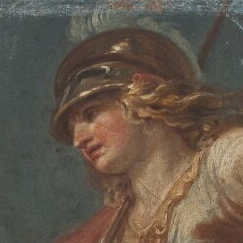
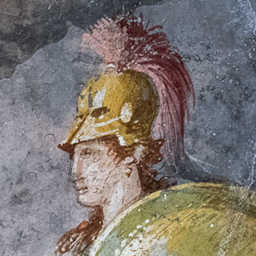
To Athena
The fumigation from aromatics
Only-begotten, noble race of Jove,1 2 3 Jove , of splendid mien,
1
Proclus in Plat. Theol. p. 372 informs
us, that there are three zoögonic or vivific monads,
Diana ,
Proserpine , and
Minerva ; and that these three divinities exist together.
Hence the reason is obvious why this Goddess is celebrated as living in caves, and delighting in
rocks and mountains, from Her agreement with Diana : and
hence it appears, that Rutikenius [Ruhnkenius? –Ed. ] was mistaken in imagining these epithets
were misplaced. We may likewise see the reason from hence, why
Minerva is called, in line 14, Female and Male, as well
as the Moon ; and why the Moon is called in
the Hymn to Her πάνσοφε κόρη , i.e. “all-wife
virgin”.
2
It is easy to perceive the agreement between Minerva, who is the same with divine Wisdom and
Minerva , and a Dragon; since according to
Phurnutus, a dragon is of a vigilant and guardian nature.
3
The fable of the giants is common; but its philosophical explanation is, i fear, but little known
and less understood. For the sake of thc liberal, therefore, the following account of the battles of
the Gods, p. 158 from the excellent Commentary of Proclus, on Plato’s Republic , p. 373, is
inserted.
“The divisible progressions of all beings, and the diversities of substances, receive a supernal
origin, from a division of unknown primitive causes, which are mutually at strife with
principles, subject to the universe. For some determine their essence about unity, on which they
depend; and others receive in themselves a never-failing power of infinity, by which they
generate universals, and a cause of multitude and progression, according to which they possess
their peculiar essences. Hence, after the same manner as the first principles of beings, are
mutually separated from each other; so all divine genera and true beings have among themselves a
progression distinguished by order.
“In consequence of this, some insert in things posterior the principle cause of unity; but
others afford the power of separation. Some are the causes of conversion to inferiors, and of
collecting the multitude of progressive natures to their proper principles: while others promote
their progression and procreation, emanating from principles, as their source. Some supply the
power of generating to inferiors; and others exhibit a constant and undefiled purity. There are
some, again, containing the cause of separable goods; and others, of such goods as subsist
together with their recipients.
“Indeed, after this manner, the various contrariety of such kinds appears in all the
administrations of true being. Thus the station or quiet of things constantly establishing being
in themselves, resists efficacious and vital powers of motion. So the communication of identity,
on every side similar to itself (if the expression may be allowed) is specially opposed to the
discretions of diversity. Thus, too, similitude fights with dissimilitude, and equality with
inequality.
“Since this is the case, can it be wonderful, that mythologists, perceiving a contrariety of
this kind among the Gods, and the first principles of things, should represent it to their
pupils by contentions and wars? For though the divine genera are always united with each other,
yet They preside as well over those who administer to union, as over those who machinate
confusion. And this is the first reason of the wars of the Gods. But it is lawful to produce
another reason, and to affirm that the Gods are indeed indivisibly conjoined, and subsist
together in mutual uniformity: but that Their progressions into the universe, and participations
by recipient natures, become disjoined and divisible, and by this means filled with contrariety.
“For things subject to the power of the Gods, cannot receive their diffused powers, and
multiform illustrations, without mixture and confusion. Hence the last orders dependent on the
Gods, since they are produced by a long interval from the first causes, but are contiguous to
the concerns they administer, and adhere to matter, contract contrariety, and an all-various
division; partially presiding over material affairs, and diminishing and dispersing those
separate powers, which before subsisted in a superior manner, uniformly and indivisibly, in
their primitive causes.
“Since, then, such and so many are the ways, by which, according to the mysteries of
theologists, war is usually referred to the Gods; other poets who, seized with fury, have
interpreted divine concerns, introduced the battles and wars of the Gods, according to the first
reasons, i.e. so far as the divine genera admit of diversity, according to the first
principles of all things. For fables, concealing truth under a veil, show that such things as
recall to principles, oppose and fight with the authors of generation: collecting with
separating natures, things unifying with such as multiply by the progression of beings; and
universal genera, with such as operate in a partial and particular manner.
“Hence they relate, that the Titans (or dæmons subservient to Nature) fight with
Bacchus , (or Nature) and the giants with
Jove . For union, and an indivisible work, is proper to
Bacchus and
Jupiter , as the demiurgic causes of the world; but the
Titans and Giants produce the demiurgic powers into multitude; partially administering the
concerns of the universe, and existing as the proximate parents of material natures.”
Thus far Proclus. For a farther account of Minerva , see
the note to Hymn X to Nature .
 Οἱ Διαδικτυακοὶ Ὀρφικοὶ Ὕμνοι The Orphic Hymns Online