📛️
Λατῖνα ὀνόματα
Roman names
🌗️
Λευκὸν χρῶμα
Light theme
Σελήνης
Θυμίαμα ἀρώματα
Κλῦθι, Θεὰ βασίλεια, φαεσφόρε, δῖα Σελήνη,
Clŷthi, Theà basíleia, phaesphóre, dîa Selḗnē, ταυρόκερως Μήνη, νυκτιδρόμε, ἠεροφοῖτι,
taurócerōs Mḗnē, nyctidróme, ēerophœ̂ti, ἐννυχίη, δαιδοῦχε, κόρη, εὐάστερε, Μήνη,
ennychíē, dædoûche, córē, euástere, Mḗnē, αὐξομένη καὶ λειπομένη, θῆλύς τε καὶ ἄρσην,
auxoménē cæ̀ leipoménē, thêlýs te cæ̀ ársēn, αὐγήτειρα, φίλιππε, χρόνου μῆτερ, φερέκαρπε,
augḗteira, phílippe, chrónou mêter, pherécarpe, ἠλεκτρίς, βαρύθυμε, καταυγάστειρα, λοχείη,
ēlectrís, barýthyme, cataugásteira, locheíē, πανδερκής, φιλάγρυπνε, καλοῖς ἄστροισι βρύουσα,
pandercḗs, philágrypne, calœ̂s ástrœsi brýousa, ἡσυχίῃ χαίρουσα καὶ εὐφρόνῃ ὀλβιομοίρῳ,
hēsychíēi chǽrousa cæ̀ euphrónēi olbiomœ́rōi, λαμπετίη, χαριδῶτι, τελεσφόρε, νυκτὸς ἄγαλμα,
lampetíē, charidôti, telesphóre, nyctòs ágalma, ἀστράρχη, τανύπεπλ’, ἑλικοδρόμε, πάνσοφε κούρη,
astrárchē, tanýpepl’, helicodróme, pánsophe coúrē, ἐλθέ, μάκαιρ’, εὔφρων, εὐάστερε, φέγγεϊ τῷ Σῷ
elthé, mácær’, eúphrōn, euástere, phéngei tôi Sôi λαμπομένη, σῴζουσα νέους ἱκέτας Σέο, κούρη.
lampoménē, sṓizousa néous hicétas Séo, coúrē.
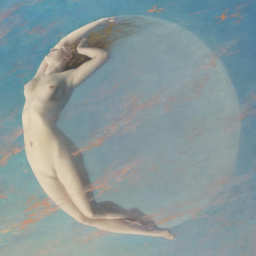
To Selene1
The fumigation from aromatics
Hear, Goddess queen, diffusing silver light,2 3 4 Diana hail!
1
The Moon is called in this Hymn both Σελήνη and Μήνη : the former
of which words signifies the Moon in the language of the Gods; and the latter is the appellation
given to her by Men, as the following Orphic fragment evinces.
Μήσαλο δ᾽ ἄλλην Γᾶιαν ἀπείριτον, ἣντε Σελήνη ἀθάνατοι κλήζυσιν, ἐπιχθόνιοι δέ τε Μηνην· ἣ
πολλ᾽ ὄυρε ἔχει, πολλ᾽ ἄρεα, πολλα μέλαθρα.
That is, "But He (Jupiter ) fabricated another boundless
earth, which the immortals call Selene, but men, Mene. Which has many mountains, many cities, many
houses."
Now this difference of names arises, according to the Platonic philosophers, from the difference
subsisting between divine and human knowledge. For (say they) as the knowledge of the Gods is
different from that of particular souls: so with respect to names some are diverse, exhibiting the
whole essence of that which is named; but others are human, which only partially unfolds their
signification. But a larger account of this curious particular, is given by Proclus in
Theol. Plat. p. 69
as follows.
There are three kinds of names: the first and most proper, and which are truly divine, subsist in
the Gods Themselves. But the second which are the resemblances of the first, having an intellectual
subsistence, must be esteemed of divine condition. And the third kind which emanate from Truth
itself, but are formed into words for the purpose of discourse, receiving the last signification of
divine concerns, are enunciated by skillful men at one time by a divine afflatus, at another time by
energising intellectually, and generating the images of internal spectacles moving in a discursive
procession.
For as the demiurgic intellect represents about matter the significations of primary forms
comprehended in its essence; temporal signatures of things eternal; divisible representatives of
things in divisible, and produces as it were shadowy resemblances of true beings: after the same
manner i think the science we possess, framing an intellectual action, fabricates by discourse both
the resemblances of other things, and of the Gods Themselves.
So that it fashions by composition, that which in the Gods is void of composition; that which is
simple by variety; and that which is united by multitude. And by this formation of names it
demonstrates in the last place the images of divine concerns. And as the theurgic art provokes by
certain signs, supernal illumination into artificial statutes, and allures the unenvying goodness of
the Gods, in the same manner the science of divine concerns, signifies the occult essence of the God
by the compositions and divisions of sounds.
2
For the mystical reason of this appellation, see note to the third line of the
Hymn to Protogonus .
3
This is not wonderful, since according to the fragment of Ficinus in this Dissertation, all souls
and the celestial spheres are endued with a two-fold power, nostic and animating; one of which is
male and the other female. And these epithets are perpetually occurring in the Orphic Initiations.
4
In the original it is τελεσφόρος , i.e. bringing to an end. And Proclus in
Theol. Plat. p. 483
informs us that Diana (who is the same with
the Moon ) is so called, because She finishes or perfects
the essential perfection of matter.
 Οἱ Διαδικτυακοὶ Ὀρφικοὶ Ὕμνοι The Orphic Hymns Online