Thereâs something disturbing about modern McDonaldâs marketing where Grimace, Hamburglar, and the rest of the McDCU cast are there, but Ronald McDonald is absent. Like heâs been erased from history after falling out of favour with the rĂŠgime.
A lot of those programs have preprompting under the hood that youâre not seeing. Midjourney has all kinds of tags that make it look a specific way, a kind of beautiful way. Suno has tags you canât see that make the output always sound âgood.â You canât interact directly with the weights of the model. Youâre being confined so the output always sounds quote-unquote âgood.â When Trevor and I are working with models, you can get way more gnarly because you have way more granular control. Itâs just not being precleaned.
Forget Victorian children or mediĂŚval peasants; âThe American pope closes his manifesto on artificial intelligence by quoting Gandalfâ is a sentence that would instantly kill a 2003-era forum user
Whenever i hear the phrase âseparating the art from the artistâ it makes me imagine something like the anti-dĂŚmon guillotine doohickey from His Dark Materials.
The Tyne and Wear Metro is a marvel of the British railway network: the only true metro system outside of London and Glasgow1, with fully accessible stations, beautiful typographic design, and only the occasional closure because someone stole all the copper wiring again. But amongst railway nerds, it is also known for one more puzzling detail: itâs a pretzel.
Thatâs right: you can, if you want, catch a Yellow Line train at Monument, go all the way around the coast, wind up right back where you started, and continue all the way down to South Shields just to rub it in. Put otherwise: there are four platforms and theyâre all for the same line.
This is, as far as i know, unique to Newcastle. Bucharest almost gets there, but chickens out just before the line actually crosses over. Sofia nearly pulls it off but, in a shocking display of cowardice, redesignates its Line 4 as âLine 2â halfway through the loop, disqualifying them immediately. The Hague does something even more complicated, but itâs on a tramway and i canât in good faith count it. And Vancouver used to have the same setup â even using the same colour â but switched to a perhaps more sensible timetabling in 2016 when an extension rendered it unworkable.
So⌠why? Whatâs the point? Letâs find out.
As is often the case with urban rail, the constituent parts of the Tyne and Wear Metro were built at different times by different, competing companies, and were only later stitched together into a coherent network.
The first part of the loop to come online was the Newcastle and North Shields Railway, starting in 1839, who ran a service from the centre of town to (where else?) North Shields, later extended a teensy bit further to Tynemouth. The N&NSRâs mighty viaducts still carry our dinky yellow trains over the Ouseburn to this day.
Meanwhile, further north, coal mining in Northumberland was growing rapidly. (This brought great prosperity to the region, which would surely never ever end. Ever. Unless they closed the mines, but come on, why would that ever happen?) The existing main-lines found themselves choked by the influx of traffic, and in 1852, Parliament authorised the incorporation of the newfangled Blyth and Tyne Railway.
The B&T at first linked Bedlington and Blyth only to the staiths at Percy Main, but by the eighteen-sixties it had added branches to the centre of town â encouraging buildup in Newcastleâs northern suburbs â and to the growing seaside holiday destination of⌠Tynemouth.
Hm.
By the early eighteen-eighties, both the B&T and the N&NSR had been absorbed into the North Eastern Railway, which found itself in the awkward position of having two formerly competing stations right next to each other and no way for trains to transfer between the two. So, in 1882, the two competitorsâ lines were linked up with a new alignment running closer to the coast, including the opening of a gorgeous palatial through station at Tynemouth, still in use by Metro trains and Sunday markets to this day.
The earliest timetable i could find, from 1902, shows that trains were indeed running in a loop around the coast, from the city centre to Wallsend to Tynemouth and back, just as is possible today.
At the dawn of the twentieth century, however, the steam services were threatened by a rising competitor: the tram. No longer did you have to put up with noisy, steam-belching locomotives every day â you could get to exactly where you wanted to go, in style! This, of course, wouldnât do, and so the NER embarked on a rapid programme of electrification. By 1904, the loop had fully switched over, and the network was rechristened the â¨ď¸ Tyneside Electrics! â¨ď¸
By this point, the network clearly resembled what we have today. Now, it didnât quite loop over itself like today â everything went through Central Station; no perpendicular Monument tomfoolery here â and there was an extra branch snaking along the riverside which was never refurbished for the Metro era. But other than that, the geometry was pretty well set, and there would be no major service changes until the introduction of â what do you mean, you want to know what the big black arrowâs for?
Whenever i show a diagram of the Metro to my non-Geordie friends, the first response is usually something to the effect of, âWhy isnât there a link between North and South Shields?â Itâs a fair question, and the canned answer i usually give is that building one would be a lot of expense for little point, since thereâs already a well-trafficked, well-loved ferry service between the two. Little did i know that it could well have been otherwise.
Elfric Wells Chalmers Kearney was an eccentric Australian engineer who spent much of his life trying and failing to convince city governments to adopt his all-new danglebahn, the Kearney High-speed Tubeâ˘. Here he is in 1910 with a model he made earlier:
The âKearney Tubeâ, as it was known, would be powered by the force of gravity, hurtling down a â gradient from stations just below the surface like a bizarro funicular before climbing gracefully back up, suspended between a monorail below and a guide rail above, which would (in theory) stabilise the trainâs side-to-side motion so as to not induce vomiting in everyone who rode it.
Mr Kearney promoted his invention in cities as distant as Sydney, London, Portsmouth, and (if secondary sources are to be believed) Venice and New York, but it came closest to reality between North and South Shields.
Over sixteen thousand Tynemouthicans signed a petition calling for its construction, and in 1925 the government gave a provisional order approving its construction. Alas, when it came time for a parliamentary committee to give Mr Kearneyâs dream the final go-ahead, they were rather more sceptical. He had raised nowhere near enough money to actually build the blasted thing, and the members were quite concerned about the impact it might have on the livelihood of the Tyneâs ferrymen.2
Mr Kearney held a grudge for the rest of his life. He made elaborate, typewritten conspiracy diagrams indicating who was paying off who, and gleefully wrote of the death of his opponents on the committee â or even those who were only tangentially connected:
Under pressure from Lord Ashfield, Henry Ford went back on his undertaking to finance the first Kearney Tube between North and South Shields. Not long afterwards Esdell Ford [sic], Henry Fordâs only son, was taken ill and died.
In 1939,
he gave it one more go, partnering with the LNER â only for the outbreak of the second world
war to put an abrupt halt to any civilian infrastructure plans. He would eventually write
a science-fiction novel titled
ErĹne, where his his protagonistâs ideas are proven correct by a utopian society on
Uranus, and if only the good people of Earth would listen!
Mr Kearney died in 1966, never having seen his utopia come to fruition. I was unable to find where or how, or even in which continent he is buried â he split his time between Australia and Britain, and he could plausibly have passed on either side of the equator. Still, i hope heâs up there somewhere, smiling down on all the shweebs, hyperloops, monorails, and other gadgetbahns of today.3
By the nineteen-sixties, the Tyneside Electrics had seen better days. Passenger numbers were falling, the trains of tomorrow were decrepit, and they werenât even electric â British Rail had deemed it more cost-effective to run slower, dirtier diesel trains. The system had become a kittiwake4 around the North Eastâs neck. So, in 1971, the local transport executive commissioned a study â and they came back with a plan.
You know how the rest goes. Though the Tyne and Wear Metro would mostly reuse the existing routes mentioned before, they would all be linked up through a newly constructed central core underground â meeting in the middle at Greyâs Monument.
The pretzel shape was completed by proceeding one stop further from Monument to stubby St Jamesâ Park.5 This was just a temporary terminus, of course â the station was built so that, in future, they could easily come back and extend it out to the long-underserved west end of the city. Quoth 1981âs âTyne and Wear Metro: concept, organization, and operationâ:
St James station is at the centre of an area designated for future office development and also serves the football ground; the station has also been designed to allow the system to be extended westwards at some future date.
So, eventually, that happened, right? They turned that little stumpy arm into a full-fledged extension. Right? âŚRight?
In 1981, environment secretary Michael Heseltine vetoed any further extensions to the Metro system. Since then, the only substantive changes have been in 1991 â inking the airport to the rest of Newcastle â and 2002, when, after twenty years, the Tyne and Wear Metro finally reached Wearside. It is around 2002 that things get a little silly.
Shortly after service to Sunderland began, Nexus (the local transport operator) announced Project Orpheus, their grandiose plan to build a transport network fit for the twenty-first century. Bus rapid transit for everyone! A cable car in Gateshead! And, yes, the valiant return of trams to Newcastle-upon-Tyne, connecting the west end up with the city centre.
None of this happened. The plans were watered down and watered down until all that was left was the vague idea of refurbishing the Metro and making buses more frequent. The great recession and austerity presumably killed any hope it had left. You still get calls from local councillors to extend the system to their part of the area, but they seem unlikely to amount to much. So is all hope lost?
Well⌠remember the Blyth and Tyne Railway?
Passenger services along the B&T north of Backworth were given the chop by Dr Beeching in the nineteen-sixties. Combined with the end of coal, this was a one-two punch in the gut for working-class mining towns like Ashington and Blyth, leaving them some of the most impoverished in the country.
Local campaigners have been calling for its reopening since the nineties, initially to little avail barring a token mention in the ill-fated Project Orpheus plan. In 2013, Northumberland County Council started taking the idea seriously. In 2019, the transport secretary gave the thumbs up. In 2021, shovels hit the dirt. And in 2024, for the first time in half a century, trains carried passengers from Ashington to Newcastle.
It may be like pulling teeth, and it may cost more than we might like, but Britain can still build things â and local politicians seem to have noticed! In 2024, work began on the first serious proposal since Orpheus to extend the Metro; this time, to Washington, along the disused Leamside line.
Curiously, the proposed extension goes in yet another loop. Itâs hard to imagine this wouldnât require some rejigging of how the network runs â a third line, perhaps? New platforms at Pelaw? But however they run it, it looks like, if it goes through â and thatâs a big if â the Yellow Line may not be alone in its topological weirdness for long.
Itâs 2026 and, somehow, the most convenient way of getting an image from my phone to my desktop (or vice versa) is still âposting it in a private Discord server with me as the only memberâ.
Absolute queer cinema. An injection of life in the arm. Possibly the only thing that would make me want to actually go to Australia. (9/10)
Unfortunately this loses steam once it stops being a road movie and starts being a True Stories-esque small-wacky-town comedy â which is, uh, most of it. That said, itâs kind of crazy how well John Leguizamo passes. (5½/10)
I love the depiction of a human/AI âcentaurâ in this â itâs so rare you see one in media, and the way itâs presented, almost like the dĂŚmon of a bicameral mind telling you what to do, is brilliant. Good enough action, too, to make up for a lacklustre performance from the lead antagonist. (8/10)
Holy shit they made the ChatGPT meme into a movie? (10/10)
There is very little i can say about this movie that has not already been expressed much better than people who are not me. Anton Chigurh is one of the most terrifying characters in fiction and he does it all with that fuckass haircut. (9/10)
Deservedly on its way to becoming a sci-fi classic. Iâve rambled about it enough already, but suffice it to say that if you havenât already gone and seen it at the cinema thrice, what the hell are you even doing? (10/10)
Jeremy Boob is the real fifth Beatle. (6/10)
RIP Dirk Diggler, you would have loved OnlyFans
I love how the porno company treat each other like one big, fucked-up family. A strangely heartwarming film for the premise (at least in the first half)! (7/10)
I went to the Tyneside Cinema thinking i was going to watch The Drama. Then i saw this on the schedules, and thought⌠well, i have to.
Every ten seconds i was soyjak-pointing at the screen and thinking, âOh, thatâs where that other thing i like got the idea from!â In that context itâs kind of funny how little emphasis is actually given to The Slideâ˘ÂŽ â itâs just a cool trick that happens in the first chase scene, but itâs so mega-cool that everyone who watched it and went on to have a career in the arts made it their lifeâs mission to do it again.
Itâs incredible that they could do all that in 1988. Few animated films come close to looking this good even today. IMDB trivia said they had to mix dozens of new pigments for all the various nocturnal hues they wanted to use, and reading that just blew my mind even more â you donât tend to think about how, before computers, you couldnât just paint in any RGB colour you wanted!
The only critique i really have is that it sags a bit around the middle, but itâs cool enough that i canât care. (9½/10), and if you ever get the chance to see it on the big screen, take it!
all the GuaranĂ at my church make me do the fortnite dance and shout go
white boy go
Didnât care much for most of this â not really the filmmakersâ fault, but any Christian conversion story is likely to bounce off me â but thereâs some beautiful shots of the South American wilds, and Ennio Morricone put his whole Morriconussy into the score as always. (4½/10)
I still havenât fully figured out what to make of this. Some of it feels underbaked; everything is caked in ten layers of metaphor, but⌠maybe i liked that? I donât know.
Anne Hathaway and Michaela Coel deserve all the awards for this. Iâm buying stock in the latter. Ms Coel to the moon for Best Supporting Actress. All in.
The songs, contributed by Charli XCX, Jack Antonoff, and FKA Twigs, are an equal highlight, and remain in my regular listening â has Ms Hathawayâs Wikipedia page been updated to list her as a singer in the opening line yet? (7/10? I think? Maybe 6?)
A chilling documentary about daily life in the White House. (6/10)
What if: Speed, but Jason Statham is the bus? The most late-2000s movies ever made. Constantly in-your-face with outrageous, offensive, adrenaline-pumping nonsense. Itâs everything you could ever ask for.
Actually, you know what? Let me just list some things included in these films. This is all real:
If you read that and thought âhell yeahâ, then Crank and Crank 2 are the movies for you. (7/10)
Before we start â i always feel a little awkward about publishing two link roundups in a row, and three especially is pushing it, so i wanted to assure everyone that i do have some more stuff in the pipe! In the coming months, you can expect (okay, hope) to see, in no particular order:
And much1 more! Anyway⌠back to the show.
Getting a âClaude is AI and can make mistakes.â tramp stamp
In Europe we call him/them 22.86 Centimetre Nails
If we were ever to make contact with a truly alien intelligence, i suspect it might resemble arguing with Claude.2And the mistakes, Schmitt noted, are weird ones: There is virtually no way that a person with any training in mathematics would make such a plethora of basic errors while also succeeding in coming up with subtle, original, and correct ideas.
In this formerly once-a-day blog, then pretty much a once-a-week blog and now an every-other-week blog if Iâm lucky, I use an app that provides a random latitude and longitude that puts me somewhere in the continental United States (the lower 48). I call this âlanding.â
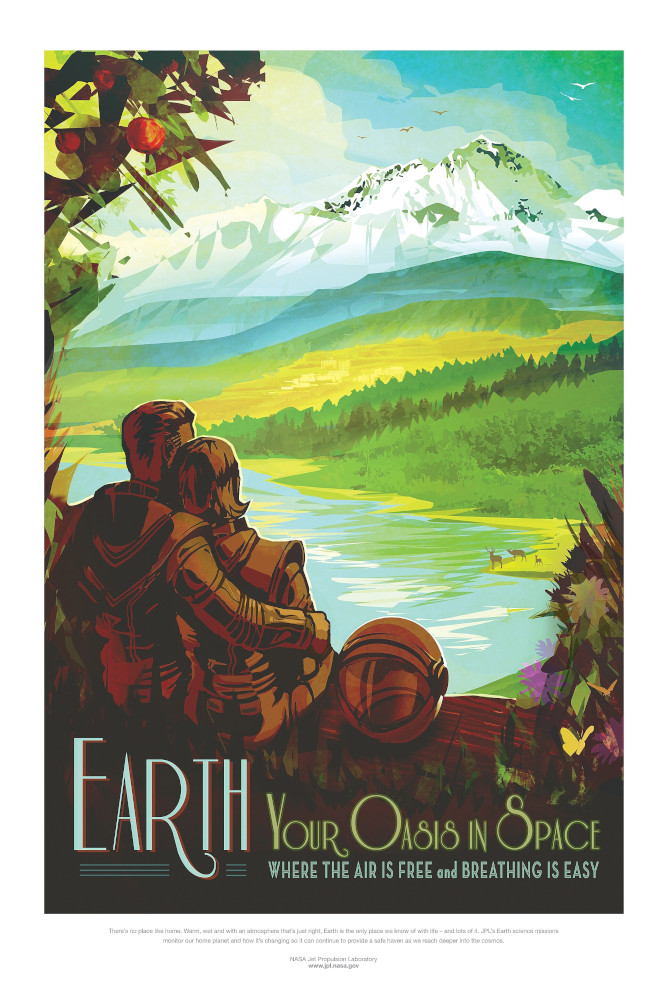
And, to finish things off, hereâs an Artemis II quickfire round! First, this picture of âEarthsetâ was the fastest iâve ever switched to a new desktop background:
Ryan Gosling has entered that pantheon of actors where i will happily go see literally anything he is in1, but itâs always nice when i wouldnât have needed convincing in the first place, and as it stands, i probably would have watched Project Hail Mary even if it had starred Neil Breen. (âŚMaybe only once, though.)
Fundamentally this film is about bromance. Bromance between Ryan Gosling and a rock. And you never doubt the chemistry once. Thatâs movie magic right there.
Itâs remarkable how well Lord and Miller nail the big, cosmic spectacle, and that classic Spielbergian sense of wonder, given that their only prior live-action director jobs have been broad comedies. Maybe Solo rubbed off on them?
Alternatively, i had always attributed much of the âhype moments and auraâ in the Spider-Verse films to the directors and the animation team, but maybe these overworking assholes do know what theyâre doing after allâŚ
At one point, the shipâs computer says the journey home will take around four years, and that really took me out of it. Donât they know Tau Ceti is twelve light-years from Earth? Are they stupid? Why even bother having it take years if youâre just going to ignore it?
Anyway, on the bus back i suddenly remembered that general relativity exists, and realised the movie was smarter than me. Embarrassing.
I remember thinking while watching, âWow, this score is crazy intense,â and then up came Daniel Pembertonâs name in the credits. Of course. âTime Go Fishingâ may well replace âNo Time for Cautionâ as my music of choice to pipe through my headphones during takeoff on a plane. A potential Oscar winner? I should bloody hope so.2
Sandra HĂźller is shockingly funny in this. Maybe iâm just used to seeing her in roles like âNazi housewifeâ and âmariticide suspectâ.
What i find most fascinating about Project Hail Mary is that this is a big, huge Hollywood action blockbuster⌠where nobody throws a single punch! The climactic show-stopping scene is a fishing trip. Thereâs not even a clearly defined villain; itâs just about cool dudes trying their best to fix a problem.
And you know what? Thatâs what we need. Iâm only the seven trillionth person to say this, but in such pessimistic times, when we seem more than ever to be ruled by a mob of ignoramuses (ignorami?), it was lovely to watch a film with an overriding message of hope. I suspect this and Superman will mark a turning point in the cynical tide of pop culture.
TL;DR: 10/10, probably going to be my favourite film of the year, see it on the biggest screen you can.