It was in the evening, just before the sun fell and dusk set in, that i packed my bags and went. A
short jaunt to the cemetery, to see some old friends.
I never knew my great-uncle and -aunt, but their name still holds some worth; their middle name and
surnames i was bestowed at birth. I searched fruitlessly through the old graves, filled with fallen
war-time knaves, but finally, by a bench and basket of waste, i found the couple’s resting place.
I didn’t think it would affect me so much, but just at the sight i felt the touch of a salty trickle
running down my cheeks. I knelt and felt i could weep for weeks. As evening turned to dusk and dusk
turned to night, i jotted down the words inscribed in white:
We often think of bygone days when we were all together
The family chain is broken now but memories live forever
I recently had some downtime and, since ’tis the season, watched Censor, a small British
horror film about a film censor during the “video nasty” panic who investigates a strangely familiar
scene.
It’s tense, stylish, and scary — all the more impressive coming from its first-time director, Prano
Bailey-Bond — becoming more and more surreal the further it progresses. Give it a watch, why don’t
you?
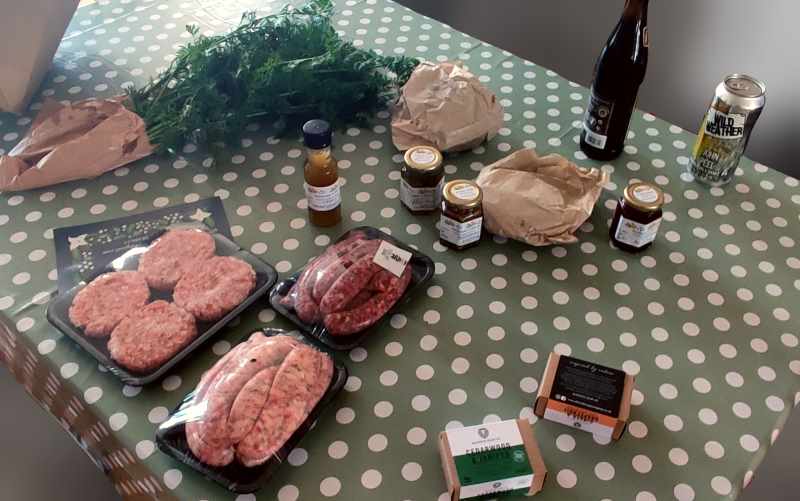
The family and i went to a local food-and-craft market at Ponteland’s garden centre this morning. I
thought i’d send letters of recommendation for some of the stalls.
Urban Bakery, from Gateshead, make the most decadent cinnamon buns i’ve ever had.
Mrs B’s Kitchen, from Durham, sells jams, conserves, chutneys, honey, sauces — all the things you ever need in the
top drawer of your fridge. (I got the rhubarb and raspberry.)
Hops and Dots, of Bishop Auckland, make “accessible craft beer” with Braille on the labels.
Wilde Farm, of Ponteland, are ostensibly running the whole thing, and sell... you know, farm things. Carrots,
veg, burgers, sausages, turkey — you get the idea. They’re currently taking
orders for the winter holidays.
Mijn oma was een enthousiaste maker van plakboeken en collage’s. Samen met de schilderijen, antieke
kasten en kitscherige hondenstandbeeldjes droeg de muren van haar huis kleine collagetjes van grote
momenten in haar leven en de mijne.
Met één kijkje rond het huis kon je meteen zien wie ze was, en waar ze om gaf. (Haar honden. Zij gaf
veel om haar honden.) Het was ongeorganiseerd; het was chaotisch; het was misschien een beetje
rommelig — maar het was echt van háár.
De huidige trends zijn nogal verschillend. Ergens na de grote recessie werd het een beetje tactloos
om met je rijkdom te pronken. De stijl du jour heeft zich gewend aan blanke muren, kale
tafels en misschien af en toe een bloempot. (Voor groene planten, natuurlijk — wat voor soort gek
zou kléúr in zijn huis willen?)
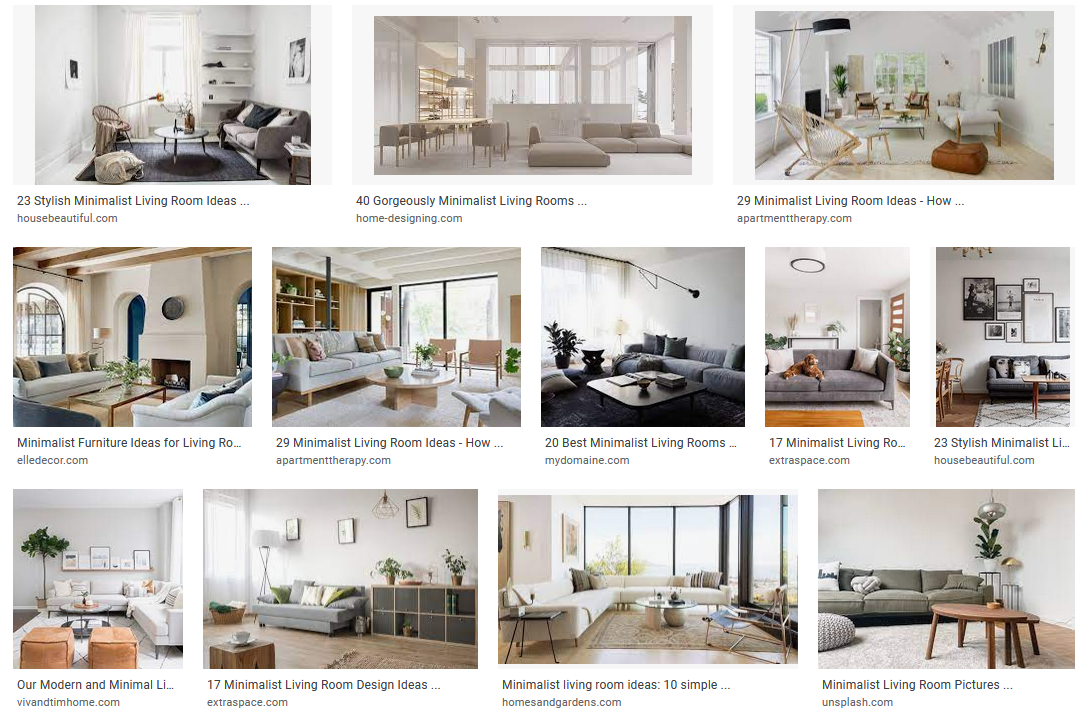
Ik heb het gevoel dat we iets verloren hebben. De topresultaten voor „minimalist livingg room” op Google Afbeeldingen, bijvoorbeeld, vertellen je bijna niks over de persoon die daar woont:
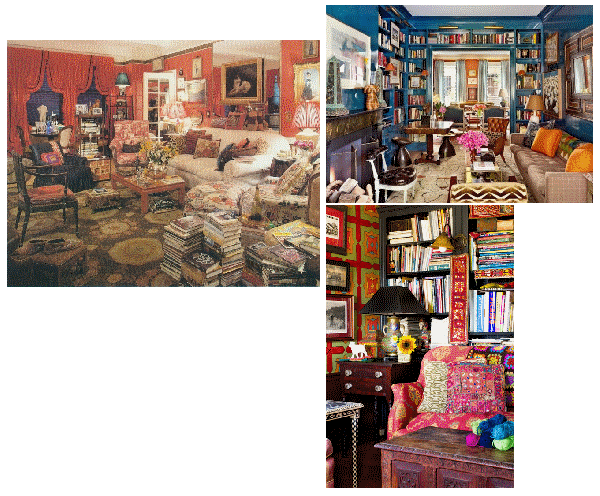
Vergelijk die met deze meer rommelige zaken, gevuld met boeken, tapijten, foto's en dergelijke, en
het verschil is als dag en nacht:
Tja, misschien ben ik gewoon chagrijnig en nostalgisch. Wat denken jullie?
When i was just a bairn, my oma was an avid scrapbooker and collage-maker. Dotted around the walls,
alongside the paintings, antique cupboards, and kitschy statues of dogs, were little collaged images
of every important moment in her life — and mine.
Just by looking around her house, you could instantly get a sense of who she was, and what she cared
about. (Her dogs. She cares a lot about her dogs.) It was disorganised, it was a wee bit cluttered —
but it was hers.
Today’s trends are rather different. Some time after the great recession (when it became,
understandably, somewhat gauche to display how much Stuff you owned), the style
du jour turned to blank, white walls, with spare tables and maybe (if you were lucky) the
occasional potted plant. As this bareness took over, i can’t help but feel something was lost.i
The top results for “minimalist living room” on Google Images, for example, tell you almost nothing
at all about the person who might be living there:
Compare with these more cluttered affairs, filled with alkin books, rugs, photos, and the like, and
the difference in the amount of personality that shines through is like night and day:
I don’t know. Maybe i’m just grumpy and nostalgic. What do you think?
TIL that subwoofers are just the bottom end of a whole range of
animal-noise terms for speakers. Subwoofers are the biggest and bassiest, but then you have woofers,
squawkers, tweeters, and even
supertweeters! Neat.
Last time on The Garden: A strip mall turns out to be a place of immense historical curiosity, i am interrupted by a
rude troupe of boy racers, and find myself caught up in the lyrics of a pro-union folk song.
Leaving Seghill, going past a house with a conspicuous
Northumbrian flag, the
landscape once again slips swiftly back into ruralia — a common occurrence on this leg of the
journey. No sooner had i left behind the station house than i found myself on a dirt path which i
wasn’t quiiiite sure i was meant to be on.
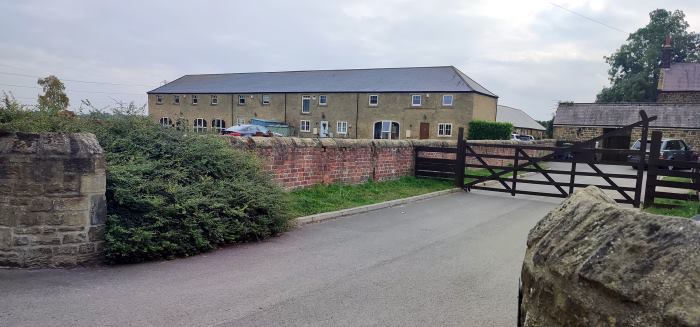
This was the small hamlet of Mare Close, essentially a farmhouse surrounded by a few cottages. I
have a sneaking suspicion that everyone living there has been friends since primary school, though
i'll never know for sure. Opposite the cottages, by the next leg of my route, lay a
small village church and
graveyard which i dared not enter. Onwards.
Seaton Delavalα sits at the heart of the valley. Turning
one way, there lies a charming local coöperative store, a
genuine lordly manor (owned by
the town’s namesake De la Val family, who came over after 1066), the
previously-blogged village of Holywell, and, eventually,
the seaside settlement of Seaton Sluice.β Unfortunately, we’ll be turning
the other way, by where once stood a colliery.
The former site of Delaval’s station can hardly be considered a sight for sore eyes. Cars and
lorries pass by, horns blaring, trying to weave their way between those turning into the nearby
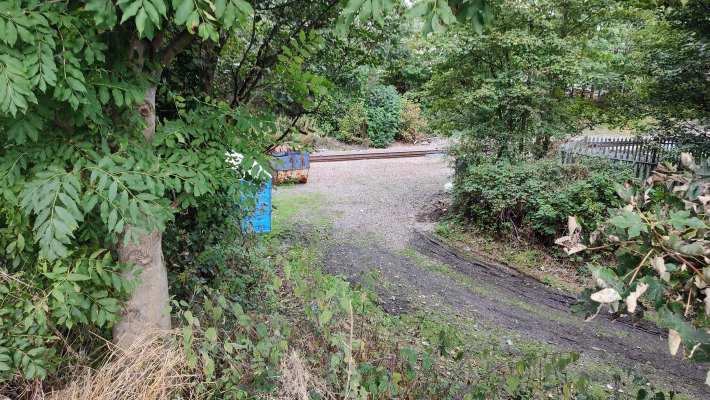
petrol station.γ The location of the station itself is an uninspiring gravel
pit on one site with an overgrown nettle-filled path on the other; next door is a chain pub whose
car park will be getting embiggened to accommodate the extra traffic once the railway reopens.
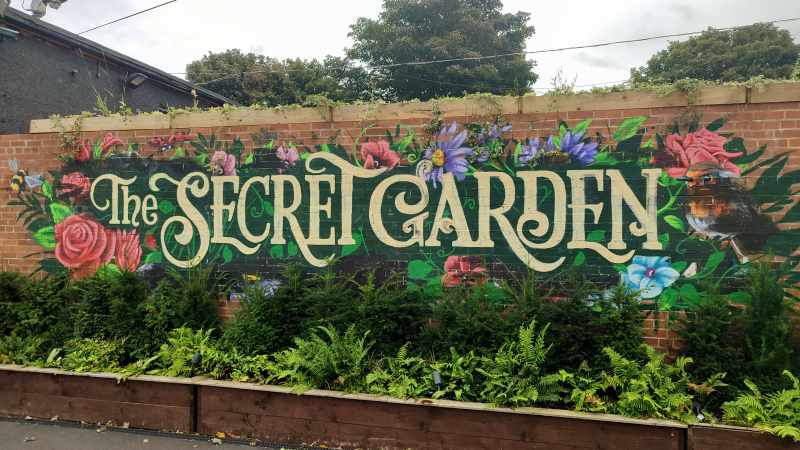
It doesn’t get much better. A few interesting-looking eateries (a grimy-looking café called “Only
Fools and Sauces”, a venue by the name of the
Secret Gardenδ with a wonderful
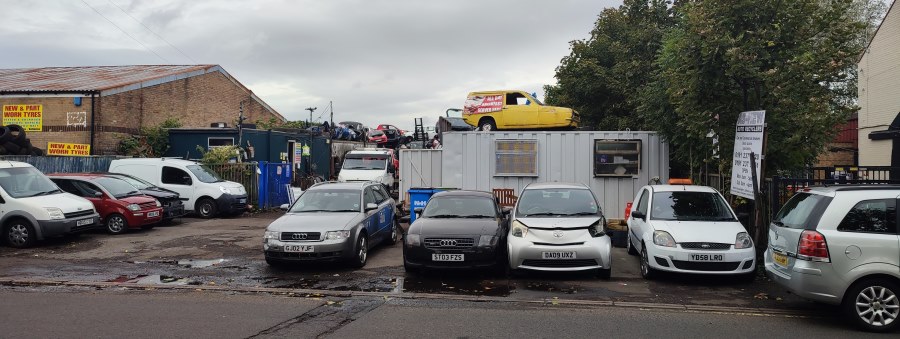
hand-painted sign) added some initial spice, but soon i was back to the same industrial wasteland:
Auto recycling! Furniture wholesalers! Caravan storage! Chemical producers! The works!
...I said something about a colliery, didn’t i?
16 January, 1862. It’s half past ten — or, at least, it might be. You’ve been labouring
away in the coal pit since two in the morning, and you’ve not seen the sun since. The shift is
almost over, and it’s time to swap over with the next group.
One by one, your comrades file in line to get out. A huddle of people enter the rusting lift. The
familiar ketter-ketter-ketter shudders through the cave — but then, for a fraction of a
second, all falls silent.
Your heart races. A drop of water falls from the ceiling. Nobody makes a sound.
And then, all of a sudden, it is as though Thor’s hammer has crashed
into the ground. The earth around you shakes in terror, lets out what can only be described as an
otherworldly scream, as ten tonnes of blood-red steel smash into the floor.
This was the
Hartley Pit disaster, and its shockwaves can still be heard across town.
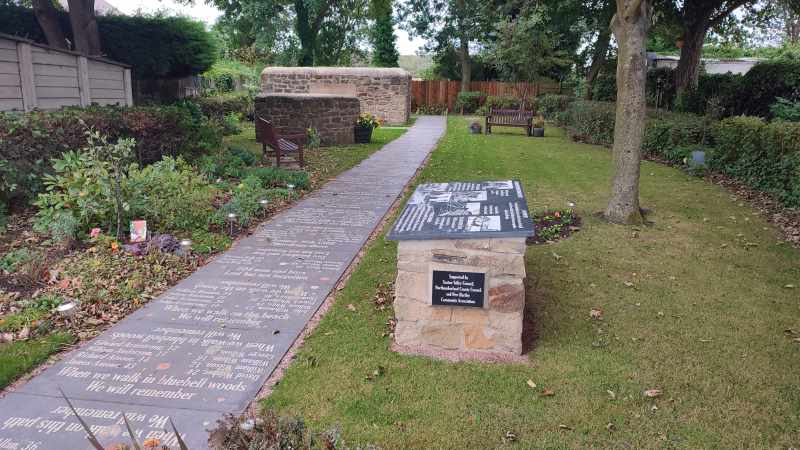
Just across from the telltale jackhammers and yellow tape of a housing estate so new Google Maps
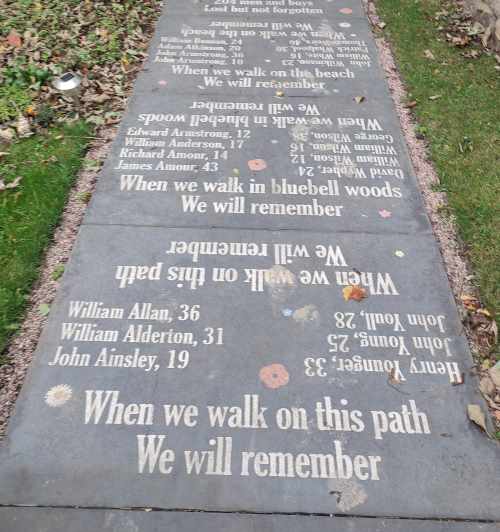
hasn’t caught up yetε sits a lovely memorial garden, explaining the story of
the tragedy, with a poem to contemplate as you ramble along the path.
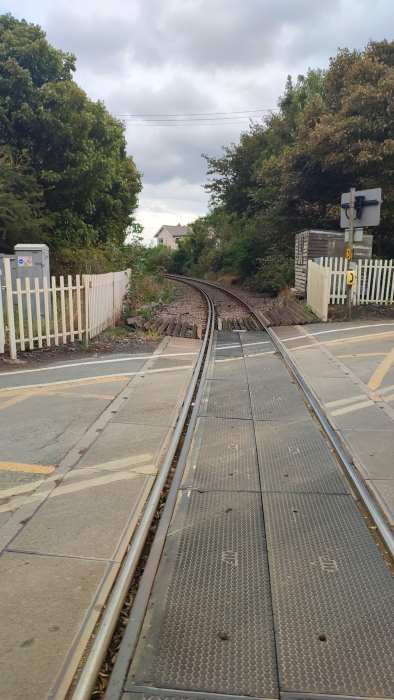
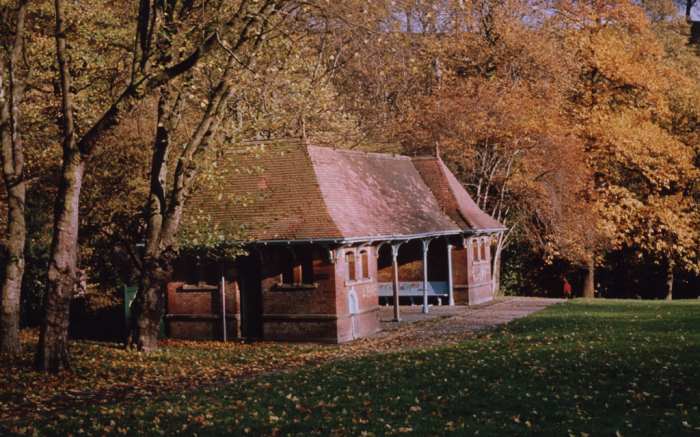
In terms of stations, the town has had two — Hartley and Hartley Pit — both right next to each
other, and neither seeming to have any chance of reopening.
I was a bit anxious about continuing on, because there were several serious-looking men in hard-hats
and high-vis jackets, but they didn’t seem to mind. They really, really should have tried to stop me
from going to where i was going next.
Coming up on The Garden: your author tries not to disturb some horses, desperately tries to avoid going to fucking
Blyth, and accidentally sneaks in a brief trip to Durham. I promise, it makes sense in
context.
Tja, volgens mij zal datums op een dag dubbelzinning worden. „Ehhh — waren die de links van 27
oktober 2021, of 27 oktober 2032?” Het is tijd om de telling opnieuw te beginnen. Welkom, iedereen,
bij het Internetassortiment!
Look — reader, i understand this about as much as you do. It just popped up in my recommendations
one day. I watched the entire series of videos this is apparently a part of, and i still don’t feel
like i get it. Something about James Dean and evil national landmarks?
This is one of the better-done things in the recent wave of “analogue horror” that has been
circulating the interwebs — short, spooky videos taking inspiration from late-night public
television or other media of the past. I just think it's neat. Anyone else want to go through the
WASHINGTONWORMHOLE?
I've decided that the only people who are allowed to do the Youtuber voice are the
Vlogbrothers. Everyone else has to learn to talk like a normal human being.
It often feels like, as soon as the calendar ticks over from 22 to 23 September, that autumn, having
hidden its face for months upon months, all of a sudden decides to come out all at once. Auburn
leaves begin to fall, telling the time until winter like an hourglass; the days get shorter and the
nights come earlier, the air gets that particular autumn crispness, and, of course, it begins to
rain.i
Not that i’m complaining. Autumn is, in my view, the most wonderful season of the year: yes, summer
is nice and warm, and winter is the time for comfort and gezelligheid with family and
friends, but autumn is when our festivities are perhaps the closest to how they were millennia ago.
Echoes of the last harvest festivals of the year still ring (school assemblies for the young,
pumpkin spice for the jaded), and whatever you want to call it — Hallowe’en, All Hallows’ Eve,
Samhain, Day of the Dead — the atmosphere about that midautumn celebration
beats even Christmas for the best time of the year; for a whole month, the western world lets itself
get a little morbid for a changeii, and the celebrations have the good sense
to get out of the way quietly once November shuffles along.
So. Happy autumn, everyone! Enjoy it while it lasts.
Last time on The Garden: the axe falls on the Blyth and Tyne line, and i foolhardily decide to walk its length…
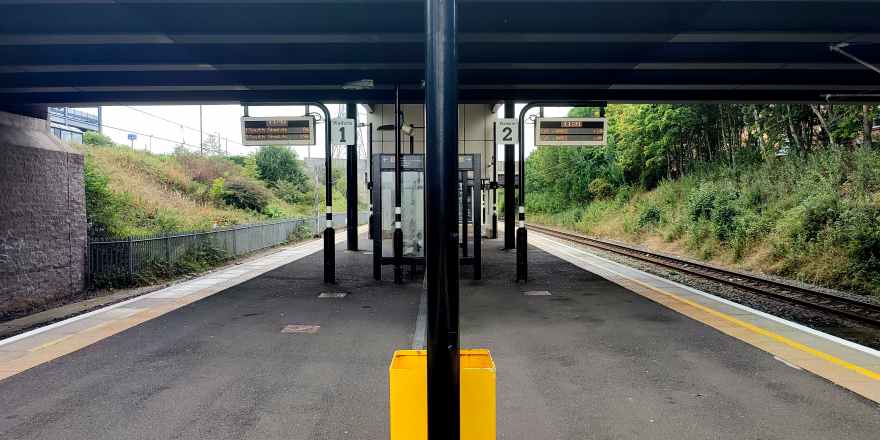
Our journey begins at Northumberland Park, in North Tyneside. Though it’s the
first station we’ll be visiting, it was the last to be constructed, having only opened in 2005 — and
it’s quite easy to tell, even after sixteen years of wear and tear; the place is outfitted with
modern amenities, lifts, ticket machines flush with the wall, and, more lately, pandemic-themed
graffiti opposite the platform. This unassuming metro station will, according to the county
council’s plans, serve as the interchange between the old and new lines, heavy rail and metro
meeting one last time before splitting apart and going their separate ways.
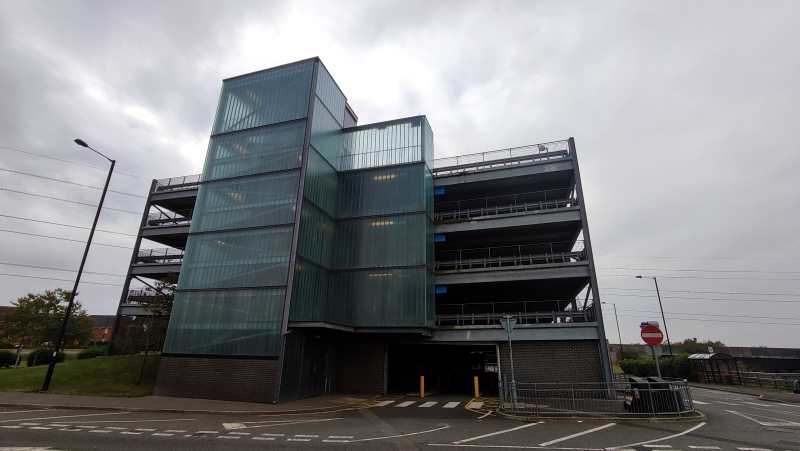
Setting off from there, the first thing that caught my eye were twin giants: a frosted glass-covered
car park and a red-brick Sainsbury’s, unexpected icons of the modern British condition. It didn’t
get much better from there; down the road lies an American-style strip mall lined with bookmakers
trying to get people to piss away all their money.
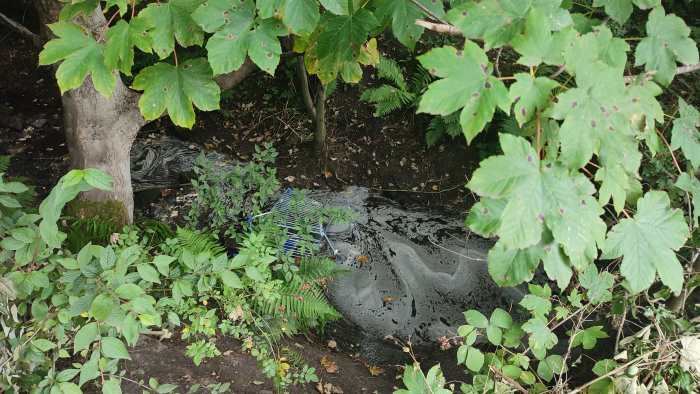
This sorry-looking trolley was, i presume, abandoned from the local Sainsbury’s.
This southernmost tip of Northumberland is criss-crossed by innumerable public footpaths, cycle
paths, bridleways, and other routes for non-metal-box-related transport; ducking onto one of the
reclaimed
“waggonways” once used
to transport coal, i found myself on the site of the second station on the list.
The leafy suburb of Backworth has a habit of burying its history.
A hoard of offerings from Roman times
was found underground in the 1810s, the last vestiges of the colliery that once was are long gone,
and the tale of this sorry ex-station is rather similar. Opened in 1864 to replace a nearby station
closing the same day, Backworth station served its community for over 100 years, surviving the
Beeching cuts. But when the Tyne and Wear Metro was announced to come to town, the old station
finally closed… for good. It wasn’t until the opening of Northumberland Park that there would be
a replacement.
As i wandered through the village's verdant streets, i couldn’t help but think of its resemblance to
the straight, cycle-friendly streets of my old hometown. A little greenery can go a long way.
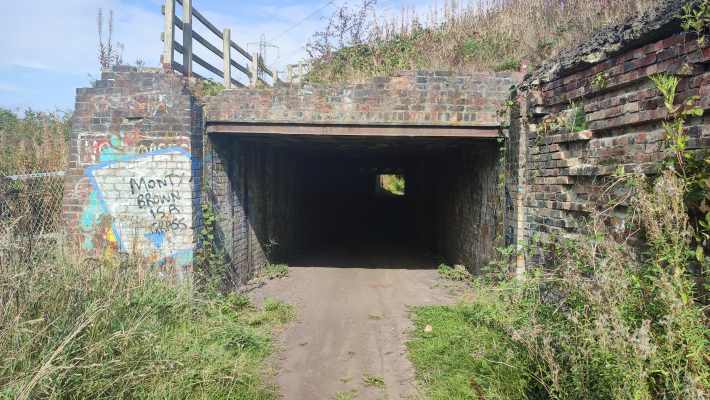
The graffiti reads “Monty Brown is a grass”. I would never say such unkind things about Mr
Brown.
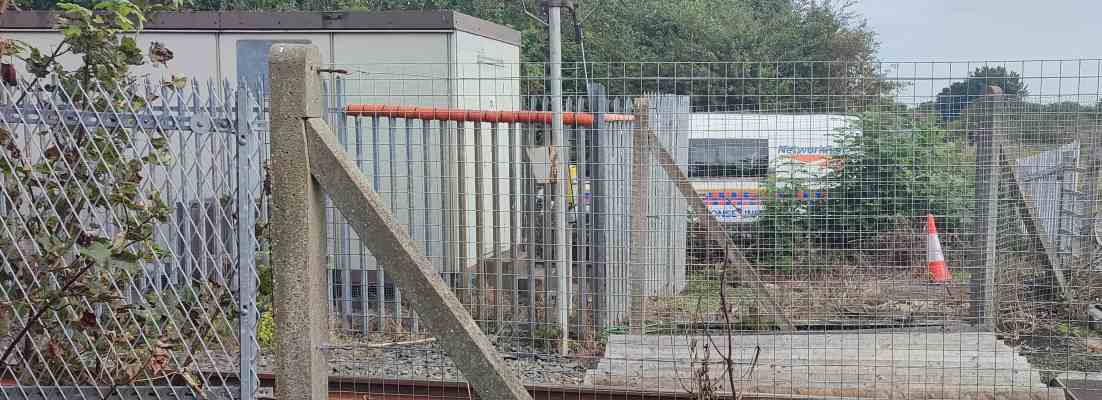
Network Rail were hard at work at the site of the aforementioned original Backworth station, whose
plot of land now sits vacant, marking the city’s last hurrah; the further i walked along the dirt
back roads, the further the sounds of bustling cars receded, until, ducking under a shady underpass,
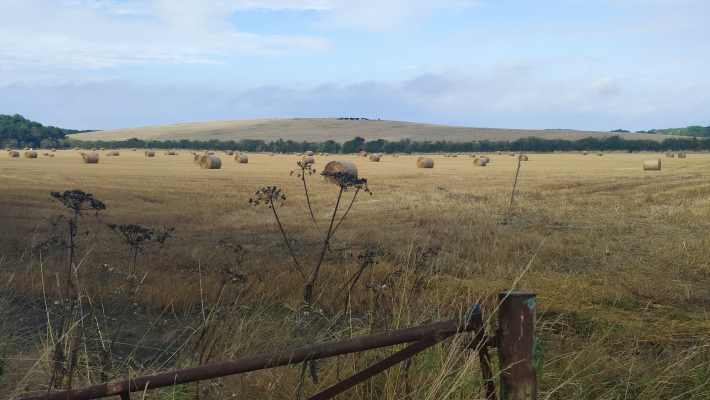
i found myself utterly alone amongst pastoral fields (and the overwhelming scent of manure).
That peace and quiet was swiftly interrupted by a troupe of boy racers on motorcycles and
quad-bikes, but you can’t win them all, you know?
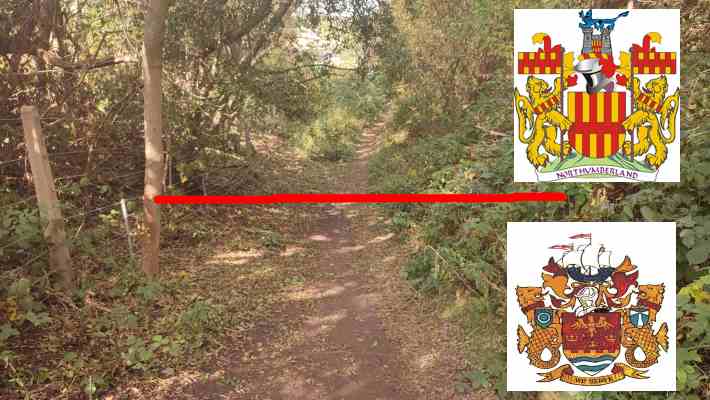
After the county borders were hacked up in 1974, this line became the divider between rural
Northumberland and ostensibly-urban Tyne and Wear.
The (post-1974) border town of Seghill occupies only the tiniest fragment of the
collective English consciousness, popping up briefly in an anti-scab miners’ folk song called
“Blackleg Miner”:
It’s in the evening after dark, when the blackleg miner creeps to work With his
moleskin pants and dirty shirt there gans the blackleg miner!
[...]
So, divvint gan near the Seghill mine Across the way they stretch a line, to catch the
throat and break the spine of the dirty blackleg miner
[...]
So join the union while you may Divvint wait till your dying day, for that may not be
far away, you dirty blackleg miner!
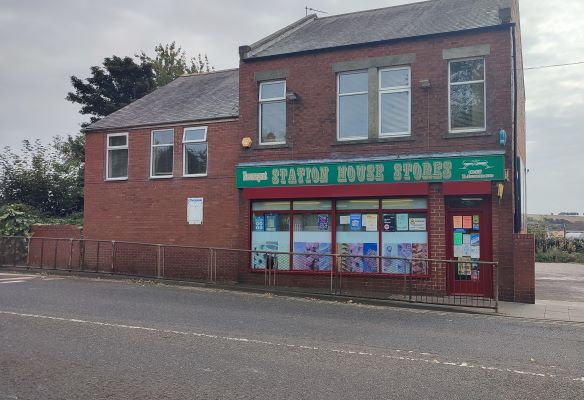
For our purposes, it’s chiefly notable for the fact that it’s the first disused station on the list
whose buildings are still intact and in use, this time as a corner shop, from which i of course
bought a copy of the local rag — prominently including a
Q&A about the restoration of service on the line, which i
thought a fitting reminder of why i set out on this silly old journey in the first place.
After getting some well deserved rest, i headed on off towards the next town over, awaiting what
fresh stories i would find...
Next time on “Walking the Blyth and Tyne”: your author is reminded of her own mortality, finds
himself in the company of a noble family, and shudders at the thought of having to go to Blyth,
of all places on Gods’ green Earth
Maart, 1963. Groot-Brittannië zit in de greep van de koudste winter in twintig jaar, een nieuwe
gezicht bestuurt de Arbeiderspartij, The Beatles hebben net hun debuutalbum uitgebracht, en diep in
de krochten van Westminster zit Dr. Richard Beeching een verslag te schrijven — een verslag die het
bindweefsel van het land voor altijd zal veranderen.
Dr. Beeching is voorzitter van de Britse Spoorwegen, een staatsbedrijf belast met de exploitatie van
het spoorwegvervoer, en zij hebben een klein financiëel probleempje. De
BS beheren ongeveer 25.000 kilometer spoor tussen 4.500 stations, en de
enige manier waarop ze zo’n grote operatie kunnen runnen is met royale subsidies van de overheid -
iets waar de regerende Conservatieven nooit erg blij mee zijn.
Dus legt hij, met een pen in de hand, zijn metaforische bijl aan het netwerk. Duizenden stations
zijn klaar om te sluiten. Het is niet prettig, maar het moet gebeuren — mensen kunnen toch gewoon de
auto nemen naar de dichtbijste station.i
Zo reden een jaar later de laatste passagiertreinen over 8.000 km spoorlijn door het hele eiland.
Dat omvatte de lijnen tussen de mijnsteden van het industriële hart van Northumberland. De Tyne
& Wear Metro opende in 1980 en liet sommige heropenen in de buitenwijken van Newcastle en
(relatief) welvarende kustplaatsen. Maar een paar km noord ligt de oude Blyth- en Tynespoorweg, al
die jaren later nog steeds dicht. Tot nu.
Het lot heeft beslist dat de graafschapsraad en Westminster nu akkoord zijn om deze steden opnieuw
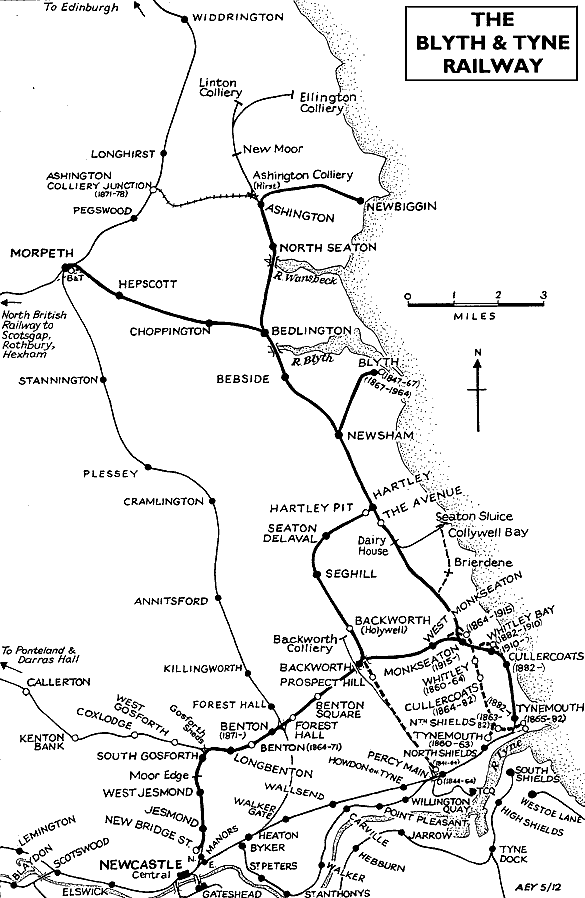
te verbinden met de metropool. De Blyth- en Tynespoorweg, nu bekend als de
Northumberlandlijn, zal, als alles volgens plan verloopt, in 2024 weer open gaan. Om dit historische moment te
vieren, dacht ik te kijken wat er geworden is van deze oude stations. Ik heb er veertien
geïdentificeerd, verleden, heden en toekomst. Ik zal tussen elk van hen lopen en elk van hun
verhalen vertellen. De lijst bevat:
Northumberland Park, een metrostation dat klaar is om het knooppunt van de
nieuwe lijn te worden
Backworth de tweede
Backworth de eerste, al lang gesloten tijdens de bijl van Beeching
Seghill
Seaton Delaval, gepland om te heropenen
Hartley Pit/Hartley, twee oude stations slechts en paar meter van elkaar
Newsham, gepland om te heropenen
Blyth, op een oude aftakking
Blyth Bebside, gepland om te heropenen
Bedlington, gepland om te heropenen
Noord-Seaton
Ashington, gepland om te heropenen
Woodhorn: stond op de eerste plannen voor heropening, maar is sindsdien mysterious verdwenen
Newbiggin: het station bestaat niet meer, maar de route is veilig gesteld voor het geval